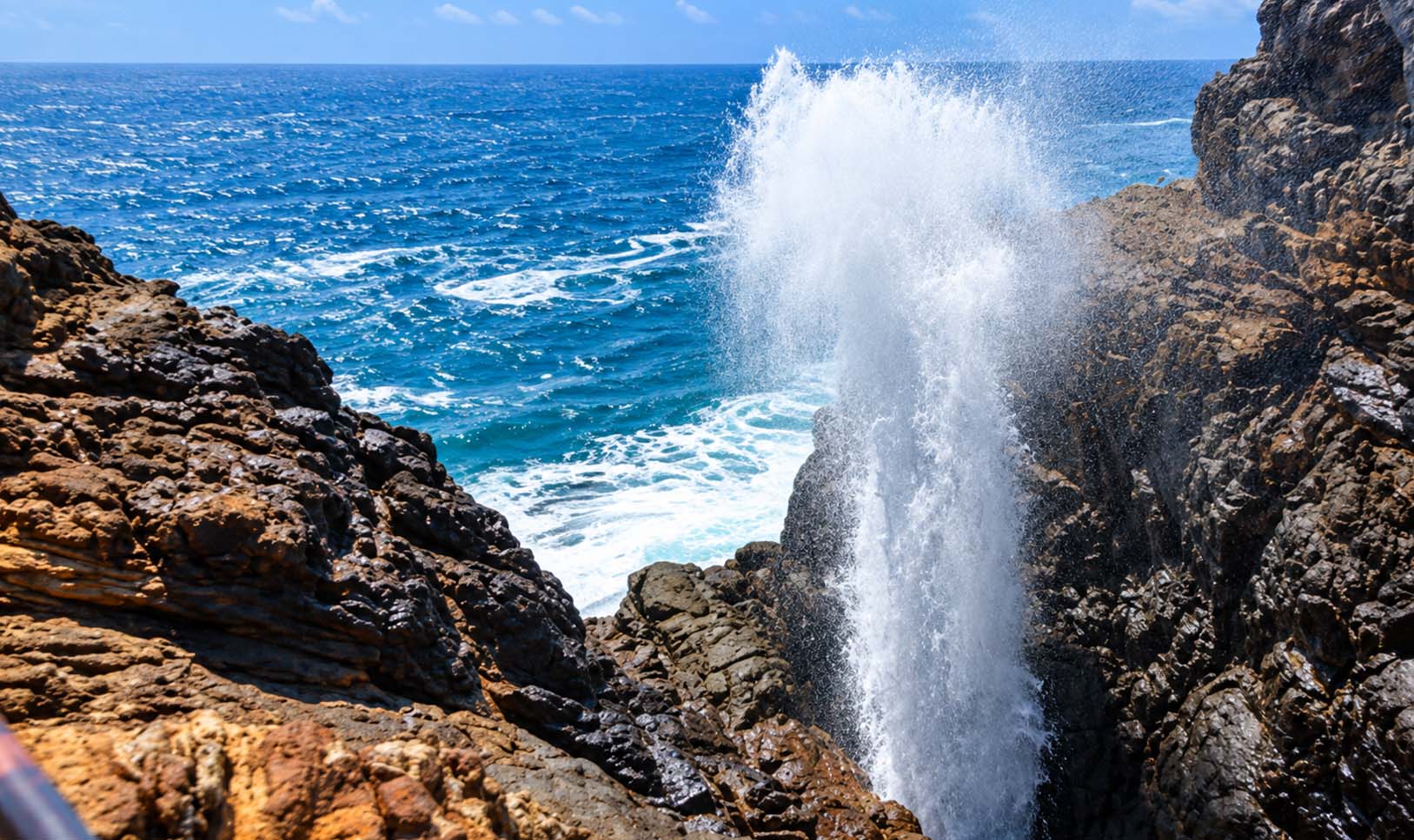
“Hummanaya”in the southern coast of Sri Lanka
What is Hummanaya and How Does It Work?
Hummanaya is a blowhole formed by sea caves that have eroded over thousands of years. When ocean waves enter these caves, the pressure forces water and air to shoot upwards through a narrow opening, creating a spectacular spout that can reach several meters high. This natural phenomenon is unique in Sri Lanka and attracts both locals and tourists.
The name “Hummanaya” comes from the Sinhala language, meaning “roaring” or “humming,” which describes the sound produced by the blowhole as water bursts through the opening. This sound has become a symbol of the power and mystery of nature in the region.
Hummanaya in Local Folklore and Storytelling
The blowhole has inspired many local legends and stories that reflect the community’s relationship with nature. One popular tale speaks of a sea spirit who guards the coast and uses the blowhole to communicate with fishermen, warning them of approaching storms or guiding them safely back to shore.
These stories serve several purposes:
Preserving cultural heritage by passing down oral traditions.
Teaching respect for nature and its unpredictable forces.
Strengthening community bonds through shared narratives.
Elders often recount these tales during village gatherings, especially during festivals or after fishing expeditions, keeping the cultural significance of Hummanaya alive.
Role of Hummanaya in Local Festivals and Rituals
Hummanaya is more than a natural attraction; it plays a role in local rituals and celebrations. Coastal communities hold annual ceremonies near the blowhole to honor the sea and seek blessings for a bountiful fishing season. These events often include:
Traditional music and dance performances.
Offerings of flowers and food to the sea.
Prayers for safety and prosperity.
The rituals highlight the community’s dependence on the ocean and their respect for its power, embodied by the blowhole’s dramatic display.
Economic and Social Impact on the Community
The cultural importance of Hummanaya extends to its economic role. The blowhole attracts visitors, which supports local businesses such as small shops, food vendors, and guides. This tourism helps sustain the community while encouraging the preservation of cultural practices.
Locals often act as storytellers and guides, sharing knowledge about the blowhole’s history and significance. This interaction fosters cultural exchange and helps visitors appreciate the deeper meaning behind the natural spectacle.
Conservation Efforts and Cultural Preservation
Recognizing the cultural and environmental value of Hummanaya, local groups and authorities have taken steps to protect the site. Conservation efforts focus on:
Preventing pollution and littering.
Maintaining safe access paths for visitors.
Educating tourists about respecting local customs.
These measures ensure that Hummanaya remains a vibrant part of local traditions and a source of pride for future generations.
How Visitors Can Respect and Engage with Hummanaya’s Culture
Visitors interested in experiencing Hummanaya should approach it with respect for both nature and local customs. Here are some practical tips:
Listen to local guides and follow their advice.
Avoid disturbing ritual sites or ceremonies.
Support local businesses to contribute to the community.
Learn about the stories and traditions connected to the blowhole.
Engaging with Hummanaya in this way enriches the experience and helps preserve its cultural significance.
Hummanaya stands as a powerful symbol of nature’s force and the deep cultural roots of the coastal communities in Sri Lanka. Its roaring waters tell stories of the sea, inspire rituals, and support livelihoods. By understanding and respecting this natural wonder, visitors and locals alike can keep its traditions alive and ensure that Hummanaya continues to be a source of cultural pride and natural beauty. Exploring Hummanaya offers more than a glimpse of nature’s spectacle; it opens a window into the heart of local heritage and community life.